
The age of agentic AI is here, and it's changing how businesses think about automation. We're no longer talking about simple "if this, then that" workflows or rigid scripts that break the moment something unexpected happens. Today's AI agents can reason, make decisions, use tools, and execute multi-step tasks with a degree of autonomy that would have seemed like science fiction just a couple of years ago.
For businesses evaluating this space, two platforms have emerged with fundamentally different philosophies: n8n, a workflow automation powerhouse that has evolved deep AI capabilities, and OpenClaw, an agent-first platform designed as a self-hosted personal AI assistant accessible through everyday messaging channels. Both are powerful. Both are open-source at their core. But they solve very different problems, and choosing the wrong one can mean months of effort pointed in the wrong direction.
At Alcyone, we've been building automation solutions for over two decades. We work with n8n daily across our client projects and have been closely tracking the emergence of agent-first platforms like OpenClaw. This article breaks down both platforms from a practical standpoint — what they actually do well, where they fall short, and which one fits your specific needs.
Two Fundamentally Different Starting Points
Understanding the core philosophy behind each platform is essential before diving into features, because that philosophy shapes everything — from how you build solutions to how they behave in production.
n8n is workflow-first. It was born as a visual automation platform, and its AI capabilities were built on top of that foundation. When you create an AI agent in n8n, you're placing it as a node inside a larger, structured workflow. That workflow might include conditional branching, data transformations, API calls, error handling, and human approval steps. The AI agent is powerful, but it operates within boundaries you define. Think of it as giving an intelligent assistant a detailed playbook — they can improvise within the plays, but the overall game plan is yours.
OpenClaw is agent-first. It was conceived as an autonomous AI assistant that lives in your messaging apps. When you set up OpenClaw, you're deploying a self-hosted gateway that connects large language models to channels like WhatsApp, Telegram, Discord, and iMessage. The AI doesn't wait inside a workflow for a trigger — it's always on, always listening, and has the autonomy to execute code, access your file system, and interact with your development environment. Think of it as giving an intelligent assistant the keys to the building and trusting them to figure out what needs to be done.
This philosophical difference has profound implications for how each platform gets used in practice, and understanding it will save you from trying to force a square peg into a round hole.
How Their AI Capabilities Compare
Both platforms support modern AI capabilities, but the way they implement them reflects their core architectures.
Reasoning and model support. n8n's AI agent node is built on LangChain, giving it access to a wide range of large language models including OpenAI, Anthropic, and others. OpenClaw takes a similar multi-model approach, supporting Anthropic, OpenAI, and additional providers. In terms of raw reasoning capability, both platforms are largely dependent on the underlying LLM you choose — the differentiator is how that reasoning gets applied.
Memory and context. n8n supports multiple memory strategies including vector stores, sliding window memory, and database-backed persistence. This means your AI agent can maintain context across interactions and retrieve relevant information from large knowledge bases. OpenClaw uses session-based memory with workspace isolation, which works well for its multi-agent architecture but takes a different approach to long-term knowledge retention. For business applications that require deep institutional memory — like a customer service agent that needs to recall months of interaction history — n8n's flexibility here is a notable advantage.
Tool use. This is where the platforms diverge most dramatically. In n8n, any of its 1,000+ integration nodes can be made available as a tool for the AI agent. Need your agent to query a database, send an email, update a CRM record, and post a Slack message? Simply connect those nodes and the agent can use them as needed within the workflow. OpenClaw's tool use is more focused on system-level capabilities — terminal access, browser automation, and an extensible plugin system. It's incredibly powerful for developers who want their AI to interact directly with their computing environment, but it doesn't match n8n's breadth of business application integrations out of the box.
Autonomy levels. n8n agents operate with high autonomy within the constraints of their workflow. They can make decisions, choose which tools to use, and handle unexpected inputs — but ultimately, the workflow defines what's possible. OpenClaw agents operate with very high autonomy, including the ability to execute terminal commands and run code. This operational freedom is both its greatest strength and its most significant risk factor, which brings us to an important discussion about security.
The Security Question
This is a topic that deserves honest discussion, especially for businesses considering deploying either platform.
n8n was designed with enterprise security in mind. Its cloud offering is SOC2 compliant, it supports Role-Based Access Control, and its workflow architecture inherently limits what any AI agent can do. An agent in n8n can only access the tools and data sources that have been explicitly connected to its workflow. This creates natural guardrails that are valuable in business environments where data sensitivity and compliance matter.
OpenClaw's security story is more nuanced. As an exclusively self-hosted platform, it gives you complete control over your infrastructure — no data leaves your servers, no third-party cloud provider has access to your conversations. For privacy-conscious users, this is a significant advantage. However, OpenClaw's powerful capabilities — particularly terminal access and code execution — have led security researchers at firms like CrowdStrike to flag it as potentially dangerous if not configured carefully. Some have described it as a "live virus" when deployed without proper safeguards.
This isn't a reason to dismiss OpenClaw — it's a reason to respect its power and configure it thoughtfully. For individual developers running it on their own machines, the risk profile is manageable. For businesses considering deploying it across teams, it requires careful security planning that many organizations may not be prepared for.
Integration Ecosystems: Breadth vs. Depth
The integration story for each platform mirrors their core philosophies perfectly.
n8n's ecosystem is vast. With over 1,000 native integrations spanning CRM systems, databases, email platforms, project management tools, cloud services, payment processors, and virtually every major SaaS application, it functions as a universal connector for business technology stacks. For a Magento 2 store owner who needs to connect their eCommerce platform with PANTHEON ERP, synchronize data with a CRM, trigger marketing automation workflows, and feed everything into a business intelligence dashboard — n8n can orchestrate all of that with AI-powered decision-making at every step. The community around n8n is also substantial, contributing templates, custom nodes, and workflow recipes that accelerate development.
OpenClaw's integration focus is narrower but deeper in its domain. Its strength lies in messaging gateway integrations — WhatsApp, Telegram, Discord, iMessage — and system-level tools. Its plugin ecosystem is growing, with integrations for platforms like Oura and Mattermost, but it doesn't attempt to match n8n's breadth of business application connectors. Instead, it focuses on being the best possible AI interface within communication channels, which is a valid and powerful use case for the right scenarios.
The User Experience Gap
How you interact with each platform day-to-day matters enormously for adoption and long-term success.
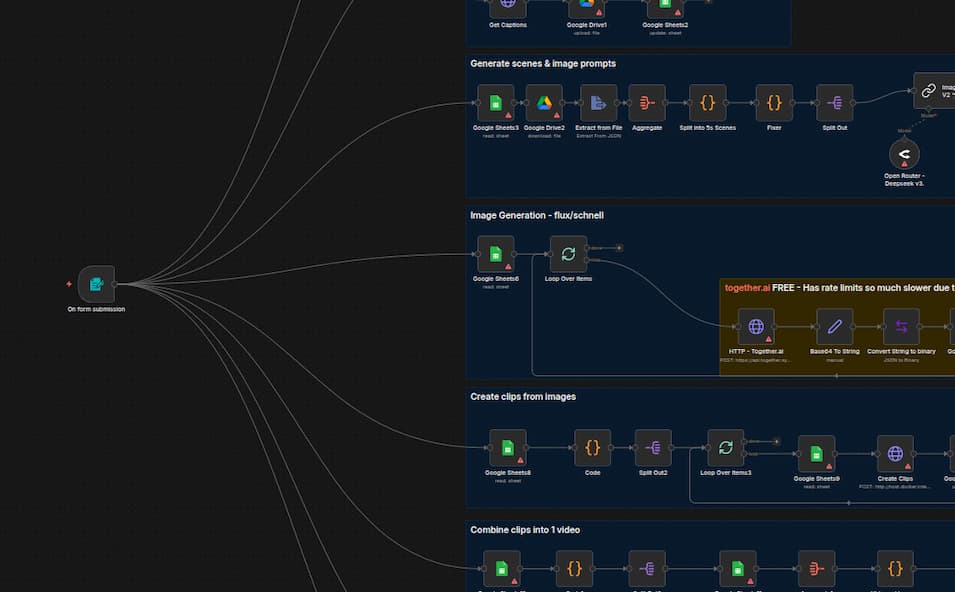
n8n's visual drag-and-drop editor is one of its most compelling features. You can see your entire automation flow laid out graphically — data flowing from triggers through transformations, AI decision points, conditional branches, and output actions. This visual representation makes complex workflows understandable at a glance and dramatically simplifies debugging. When something goes wrong, you can click on any node and see exactly what data it received and what it produced. For teams that include both technical and non-technical members, this visual approach lowers the barrier to participation in automation design.
OpenClaw takes a CLI-first approach. Setup and configuration happen primarily through the command line, and while a browser-based dashboard exists for managing the gateway and monitoring sessions, the primary interaction model is through messaging apps. You talk to your AI agent the same way you'd message a colleague — through WhatsApp, Telegram, or Discord. This is elegant in its simplicity for individual power users, but it can be limiting when you need to design, document, and share complex automation logic across a team. There's no visual representation of what the agent is doing or how it makes decisions, which can make troubleshooting more challenging in business contexts.
Deployment and Pricing: What It Actually Costs
Both platforms offer self-hosting options, but their commercial models differ significantly.
n8n uses a fair-code license model. You can self-host it for free for personal use, but commercial deployments, cloud hosting, and enterprise features like RBAC and SSO require paid subscriptions. This hybrid model means you can start for free, prove value, and scale into paid tiers as your needs grow. The cloud offering removes the operational overhead of managing infrastructure, which is valuable for teams that want to focus on building automations rather than maintaining servers.
OpenClaw is MIT Licensed — completely free and open-source for any purpose, including commercial use. There are no paid tiers, no feature gates, and no vendor lock-in. The trade-off is that you're entirely responsible for hosting, maintaining, securing, and updating the platform. For organizations with strong DevOps capabilities, this is liberating. For teams without dedicated infrastructure expertise, it can become an ongoing operational burden that distracts from the actual work of building AI-powered solutions.
Where Each Platform Excels
After working extensively with both platforms and evaluating them against real-world business requirements, here's our assessment of where each one shines.
Choose n8n when you need:
Structured business process automation is n8n's sweet spot. If you're automating workflows that span multiple business applications — syncing orders from Magento to your ERP, triggering fulfillment workflows, updating customer records, generating reports — n8n handles this with grace. Its AI agent capabilities add intelligence to these workflows without sacrificing the reliability and predictability that business operations demand.
Complex data pipelines that require AI-driven decision-making are another area where n8n excels. Building RAG systems that retrieve information from diverse sources, process it with AI, and route the results to appropriate business systems is straightforward in n8n's visual environment.
Enterprise environments with compliance requirements benefit from n8n's security posture, RBAC, and audit capabilities. When you need to demonstrate to stakeholders that your AI automation operates within defined boundaries and produces traceable results, n8n's architecture supports that conversation.
Choose OpenClaw when you need:
A personal AI assistant that lives in your communication channels is OpenClaw's primary strength. If you want an always-on AI that you can message through WhatsApp to check on something, ask it to run a script, or have it coordinate tasks across your development environment, OpenClaw delivers an experience that no workflow tool can match.
Developer tooling is another compelling use case. The ability to interact with your local development environment through natural language — asking your AI to run tests, analyze logs, debug code, or manage files — is powerful for individual developers who want to augment their capabilities without leaving their communication workflow.
Maximum privacy and control matter to some users more than convenience. If you need complete assurance that your AI interactions never leave your infrastructure and you want full transparency into how the system operates, OpenClaw's self-hosted, MIT-licensed model provides that guarantee.
Can They Work Together?
An interesting possibility that often gets overlooked in platform comparisons is that n8n and OpenClaw aren't necessarily competitors — they can be complementary.
Consider a scenario where OpenClaw serves as the conversational interface for a team, accessible through the messaging channels they already use daily. When a user's request requires complex business logic — processing an order, updating inventory across multiple systems, generating a report from several data sources — the OpenClaw agent could trigger n8n workflows via API calls, leveraging n8n's extensive integration ecosystem and structured workflow execution.
This architecture gives you the best of both worlds: the natural, always-available conversational interface of OpenClaw with the robust, auditable, enterprise-grade automation capabilities of n8n. We've seen early experiments with this approach produce promising results, and it's an architecture worth considering for organizations that have the technical capacity to manage both platforms.
Practically speaking, this hybrid approach works well for teams where different stakeholders have different interaction preferences. A warehouse manager might prefer receiving and responding to alerts through Telegram via OpenClaw, while the operations team designs and monitors the underlying inventory management workflows in n8n's visual editor. The AI layer bridges the gap between how people naturally communicate and how business processes need to execute reliably.
Practical Considerations Before You Start
Regardless of which platform you choose, there are some practical realities worth addressing before you commit.
Start with a clear use case. It's tempting to deploy a platform and then look for problems to solve with it. This rarely works well with agentic AI. Instead, identify a specific business process that's painful, repetitive, or error-prone, and build your first automation around that. A focused pilot project teaches you more about a platform's real-world behavior than weeks of theoretical evaluation.
Budget for the learning curve. Both platforms require investment in understanding — n8n through its workflow design patterns and node ecosystem, OpenClaw through its CLI setup, security configuration, and plugin development. Allocate time for your team to build competence before expecting production-ready results. The visual nature of n8n generally means a shorter ramp-up for teams with mixed technical backgrounds, while OpenClaw rewards developers who are comfortable with command-line tools and system administration.
Plan for maintenance from day one. Automation isn't a set-and-forget proposition. APIs change, business requirements evolve, and AI models get updated. Both platforms require ongoing attention — n8n through workflow monitoring and node updates, OpenClaw through plugin maintenance and security patching. Factor this operational cost into your decision, especially if your team is already stretched thin.
Consider your data architecture. The effectiveness of any AI-powered automation depends heavily on the quality and accessibility of your underlying data. Before investing in either platform, assess whether your business data is structured, accessible, and clean enough to feed meaningful AI interactions. The best AI agent in the world can't produce good results from fragmented or inconsistent data.
Making the Decision
The choice between n8n and OpenClaw ultimately comes down to what you're trying to build and who will be using it.
If your primary goal is automating business processes, integrating multiple systems, and building AI-powered workflows that are reliable, scalable, and manageable by a team — n8n is the stronger choice. Its visual interface, extensive integrations, and enterprise features make it a practical foundation for business automation that happens to be very good at AI.
If your primary goal is deploying a personal or team AI assistant that lives in messaging channels, offers deep system access, and prioritizes privacy and developer control — OpenClaw offers capabilities that workflow-centric platforms simply can't replicate. Its agent-first architecture creates a fundamentally different interaction model that resonates with technical users who want AI woven into their daily communication flow.
At Alcyone, we work primarily with n8n across our automation projects because the majority of our clients need structured, reliable, enterprise-ready automation that integrates with their existing technology stacks — Magento 2 stores, PANTHEON ERP systems, CRM platforms, and marketing tools. But we recognize that the agent-first paradigm OpenClaw represents is an important direction for the industry, and we're actively exploring how conversational AI interfaces can complement workflow-driven automation.
The best technology choice is always the one that fits your specific context. If you're evaluating agentic AI platforms and want guidance tailored to your business requirements, we're happy to help you navigate the decision.
Alcyone d.o.o. builds intelligent automation solutions for businesses across Slovenia, Austria, Germany, and Croatia. From eCommerce platforms to AI-powered workflow automation, we help companies work smarter. Get in touch to discuss your automation strategy.

Comments (0)
Join the conversation
Log in to share your thoughts and engage with other readers.
Log In to CommentNo comments yet
Be the first to share your thoughts!