
Over the past two years, we have witnessed a revolution in artificial intelligence that goes beyond merely generating text and images. We are talking about AI agents – intelligent systems that can independently plan, execute, and oversee complex business processes. But how do we approach this transformation, and which tools should we choose?
Why Traditional Automation Is No Longer Enough
Traditional process automation (RPA) is based on predefined rules: if A happens, do B. This approach works excellently for repetitive tasks with predictable outcomes. But what happens when the rules change? When we need to process unstructured data? When we require adaptability?
This is where large language models (LLMs) and AI agents come into play. Instead of rigid rules, they use contextual understanding, reasoning, and the ability to adapt to new situations. This is no longer simple automation – it's intelligent process orchestration.
Tools for Building Intelligent Systems
N8N: Visual System Integration
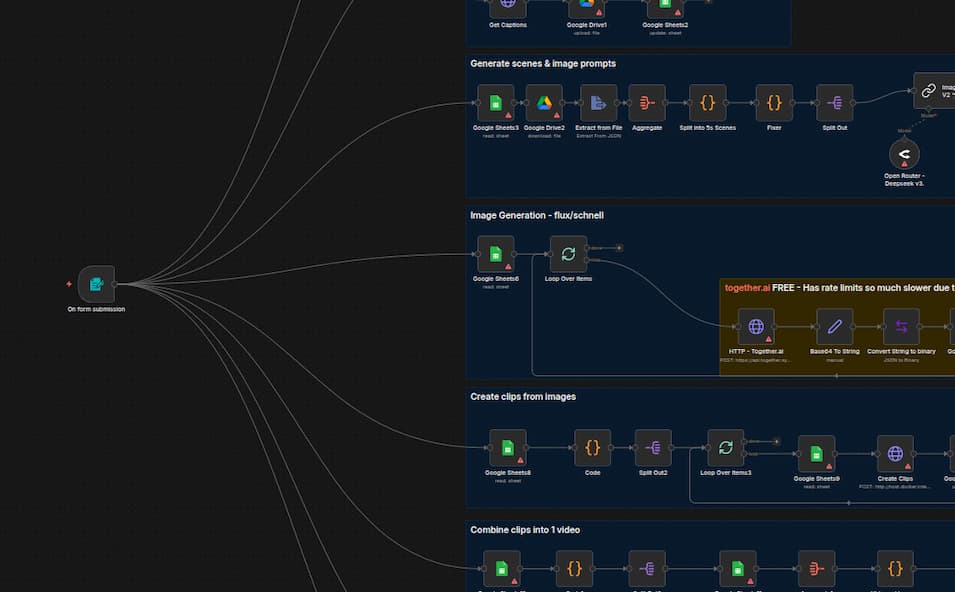
N8N is an open-source workflow automation platform that enables visual connection of various applications and services. Its power lies in simplicity – complex integrations can be built without writing code. With built-in AI nodes, we can incorporate calls to ChatGPT, Claude, or local LLM models into our workflows.
A practical example: automatic processing of incoming emails, where AI reads the content, categorizes it, extracts key data, and triggers appropriate follow-up actions in a CRM system.
CrewAI: Teams of AI Agents
CrewAI represents a paradigm shift – instead of a single agent, we create an entire team of specialized agents that collaborate on solving complex tasks. Each agent has its own role, set of tools, and responsibilities.
Imagine a team preparing a business report: a researcher gathers data, an analyst processes it, a writer prepares the text, and an editor reviews the final product. Each agent performs their work autonomously while communicating with other team members.
RAG: Custom Knowledge
Retrieval-Augmented Generation (RAG) is a technique that gives LLM models access to company-specific knowledge. Instead of relying solely on training data, the system first searches for relevant documents in your knowledge base, then generates a response based on those documents.
This means ChatGPT or Claude can answer questions about your internal processes, products, or services – with current and accurate information. RAG is the foundation for building intelligent assistants that truly understand your business.
Claude.ai and ChatGPT: The System's Brain
Large language models are the core of every AI system. Claude (Anthropic) and ChatGPT (OpenAI) are currently the leading models, each with its own strengths. Claude excels in analytical thinking and working with extensive documents, while ChatGPT offers a broad ecosystem of tools and plugins.
The key insight: LLM models alone are not the solution. They are a component in a broader system that requires proper orchestration, access to tools, and integration with business processes.
How to Improve LLM System Performance
Prompt Engineering
Output quality is directly dependent on input quality. Structured prompts with clear instructions, examples, and constraints drastically improve results. Chain-of-Thought (step-by-step reasoning) and Few-Shot Learning (learning from examples) techniques are fundamental for reliable outcomes.
Tools and Function Calls
Modern LLM models can call external functions – search the web, perform calculations, access databases. This allows them to transcend the limitations of static knowledge and interact with the real world.
Evaluation and Monitoring
AI systems require continuous monitoring. Establish metrics to measure output quality, log all interactions, and regularly analyze errors. Tools like LangSmith, Weights & Biases, or simply custom logging systems are essential for production environments.
Human Oversight
Despite AI system advances, human oversight remains crucial. Implement checkpoints where humans confirm critical decisions. Especially for high-risk processes, a hybrid human-AI approach is best practice.
How to Get Started
I recommend a gradual approach. Start by identifying processes that are time-consuming, repetitive, and require processing unstructured data. Choose a pilot project with measurable goals.
Then build a minimum viable product (MVP) with N8N or a similar tool, test it on real data, and iteratively improve. Only when the system proves its value should you expand and automate additional processes.
Conclusion
Managing processes with AI is not a futuristic vision – it's today's reality. Tools are accessible, usage costs are falling, and results are measurable. The key to success lies in a thoughtful approach: understanding the capabilities and limitations of the technology, clearly defining goals, and gradual implementation with continuous learning.
Companies that make this transition in a timely and thoughtful manner will gain a significant competitive advantage. The question is no longer whether, but when and how.


Comments (0)
Join the conversation
Log in to share your thoughts and engage with other readers.
Log In to CommentNo comments yet
Be the first to share your thoughts!